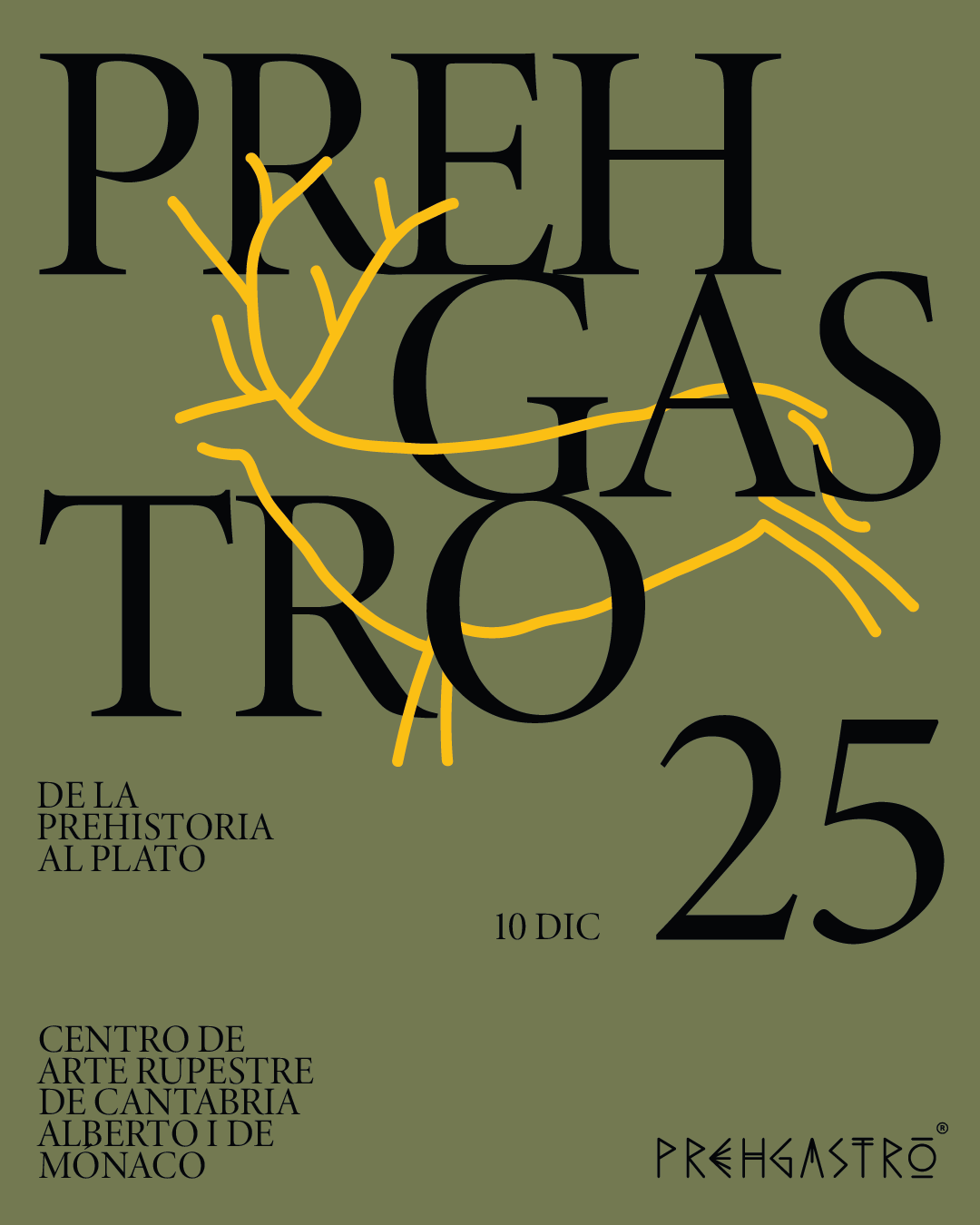
The Valles Pasiegos Local Action Group, together with the EvoAdapta research group of the University of Cantabria, is organizing the second edition of PrehGastro, a pioneering initiative that unites archaeology, heritage, and gastronomy to transform scientific knowledge into sensory and cultural experiences.
The event, which will take place on December 10 at the Cantabria Rock Art Centre in Puente Viesgo, offers a unique immersion in prehistoric culture through dialogue between science, territory, and contemporary cuisine. The project is funded by the LEADER programme of the Valles Pasiegos Local Action Group and sponsored by the Regional Ministry of Culture, Tourism and Sport; Cultura Cantabria; the Regional Society for Education, Culture and Sport; Sabe a Norte (ODECA); and the Puente Viesgo City Council. It reflects the collaboration between academic, cultural, and rural institutions around a common goal: to highlight pasiego identity and prehistoric heritage as drivers of sustainable development.
Science and territory brought together at the table
PrehGastro 2025 stems from the belief that scientific knowledge about the past can also be a tool for the future. This new edition broadens the perspective initiated in Santander in 2024 and now explores the Pasiego territory, a place where the history of humankind remains alive in its caves, landscapes, and traditions.
The project is based on a key premise: gastronomy can serve as a language for communicating science and as a bridge connecting local communities with their heritage. In this edition, the collaborative work of researchers, chefs, guides, and producers aims to show how archaeological findings — seeds, bones, stones, or shells — not only narrate cultural evolution but also inspire contemporary ways of understanding the territory and its food.
A region with living prehistoric roots
The Valles Pasiegos are home to an exceptional group of rock art sites that form a fundamental part of European Paleolithic art. The caves of El Castillo, Las Monedas and La Pasiega in Puente Viesgo, together with Salitre in Miera, form a complex recognized by UNESCO as a World Heritage Site. These sites offer a unique window into the ways of life, spirituality, and symbolic creativity of the communities that inhabited the territory more than 35,000 years ago.
For the Valles Pasiegos Local Action Group, this legacy is not only historical testimony but also an opportunity for the future. In the words of its president, Ángel Sainz Ruiz:
“Scientific information obtained from the caves in our region is not only a window into the past but also a source of inspiration for the present. The caves of Puente Viesgo and Miera speak to us about the origins of humanity, and linking this legacy with contemporary gastronomy is a way of keeping alive the connection between landscape, identity, and ancestral knowledge. In Valles Pasiegos, culture and gastronomy share the same root: the land and memory.”
From this integrative perspective, PrehGastro is conceived as a space for knowledge transfer, where the results of archaeological research are transformed into gastronomic practices, cultural narratives, and new economic opportunities for local actors.
From Prehistory to the plate
This year’s event revolves around three main themes: scientific dissemination, gastronomic creation, and territorial connection. Through debates, presentations, and culinary experiences, the programme explores how prehistoric foods and techniques can inspire modern cuisine, while also promoting cultural and gastronomic tourism in Cantabria.
Within this framework, Ana B. Marín‑Arroyo, Professor of Prehistory at the University of Cantabria and director of EvoAdapta, highlights the essence of the project:
“Through PrehGastro we bring research to the plate: every finding raises questions that chefs transform into flavours. It is a way for science to beat within the territory and reach people through food.”
The programme combines academic reflection with culinary experimentation. Presentations and roundtables will address topics such as paleobotany, prehistoric diet and subsistence, heritage education, and gastronomic creativity as a tool for scientific outreach to enhance the value of the territory. Participants include professionals from the academic, museum, production, restaurant, and hospitality sectors, who will share perspectives on how to narrate the past from different disciplines.
Science you can taste
The event will conclude with the “Living Cuisine” experience, in which chefs Miki Rodríguez (UMMA Restaurant, Santander), Aitor Lobato (La Lleldiría) and Óscar Ferreras Gutiérrez (Ruda Restaurant) will reinterpret the landscape and memory of Cantabria using ancestral techniques and locally sourced products. Their proposal, inspired by EvoAdapta’s scientific results, will demonstrate that research can also be translated into emotion and flavour.
For his part, David Pérez, chef at Ronquillo Restaurant (Ramales de la Victoria), who will take part in the opening alongside Ana B. Marín‑Arroyo, notes:
“Working with Prehistory forces us to rethink ingredients and techniques from the root; the dialogue with research revives flavours that speak of the landscape and our most ancestral history.”
Training, consultancy, and outreach
Beyond the main event, PrehGastro includes a set of training and support activities aimed at chefs, tour guides, producers, and artisans of the region. Through workshops and advisory sessions, the project promotes the creation of menus inspired by prehistoric diets, the development of integrated tourism experiences, and the professional training around archaeogastronomy as a new cultural resource.
The programme also includes a communication strategy coordinated by GAL Valles Pasiegos and EvoAdapta, integrating the experiences developed in Valles Pasiegos into the existing website, creating content for social media, and promoting the project in regional and national media, with the aim of positioning Valles Pasiegos as a leading destination for cultural and gastronomic tourism rooted in heritage.
From the success of 2024 to the future of the Valles Pasiegos
The first edition of PrehGastro, held at the Palacio de la Magdalena, was very well received and set a precedent by bringing together researchers, gastronomic journalists, cultural managers, and chefs in a shared space for dialogue. The 2025 edition expands that collaborative spirit to the Valles Pasiegos, taking the event to the very territory where history was written.
This step reinforces the LEADER strategy of the Valles Pasiegos Local Action Group to promote sustainable development through culture and rural innovation, connecting science, heritage, and the productive sector. The proposal is aligned with the Local Participatory Development Strategy (EDLP), which aims to energize the rural environment and diversify its economy through projects that promote local identity and knowledge.
Organization and partners
PrehGastro 2025 is organized by the Valles Pasiegos Local Action Group together with the EvoAdapta Group of the University of Cantabria–FLTQ, and funded by the LEADER programme, made possible in the Pasiego region thanks to the collaboration of local councils and associations, the Regional Ministry of Rural Development, Livestock, Fisheries and Food; the Ministry of Agriculture, Food and Environment; and the European Union’s FEADER funds. The event is sponsored by the Regional Ministry of Culture, Tourism and Sport; the Regional Society for Education, Culture and Sport; Sabe a Norte (ODECA); and the Puente Viesgo City Council.
For interviews or graphic material, please contact:
📧 evoadapta@unican.es