Following its success at the Museum of Altamira and the Oiasso Roman Museum, the exhibition curated by the EvoAdapta Group, led by Professor Ana Belén Marín-Arroyo, arrives in Andalusia: new museums continue to back research that establishes the UC as a benchmark in open science and public engagement
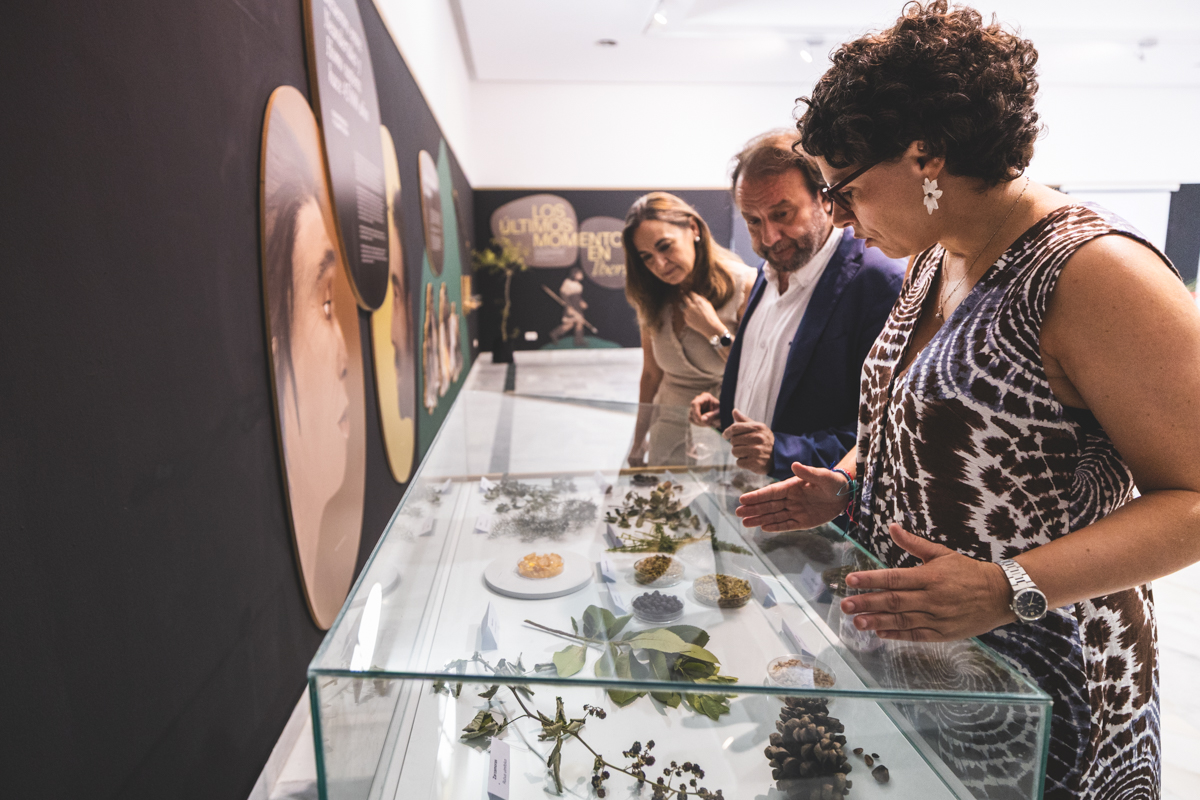
The exhibition “The Neanderthal decline 45,000 years ago. Climate crisis and the arrival of Homo sapiens” can now be visited in Córdoba, continuing a tour that began in Cantabria and keeps gathering support. Last Monday, 13 July, the Museum of Ethnobotany of the Royal Botanical Garden of Córdoba —part of the Municipal Institute for Environmental Management (IMGEMA) of Córdoba City Council— became the new venue for the exhibition that the EvoAdapta Group of the University of Cantabria has already taken to the Museum of Altamira (Santillana del Mar) and the Oiasso Roman Museum (Irún). The fact that leading institutions continue to host the exhibition confirms the scientific and cultural value of a body of work led by Professor Ana Belén Marín-Arroyo, and reinforces the University of Cantabria as a benchmark in science communication.
An opening panel that championed science in the service of society
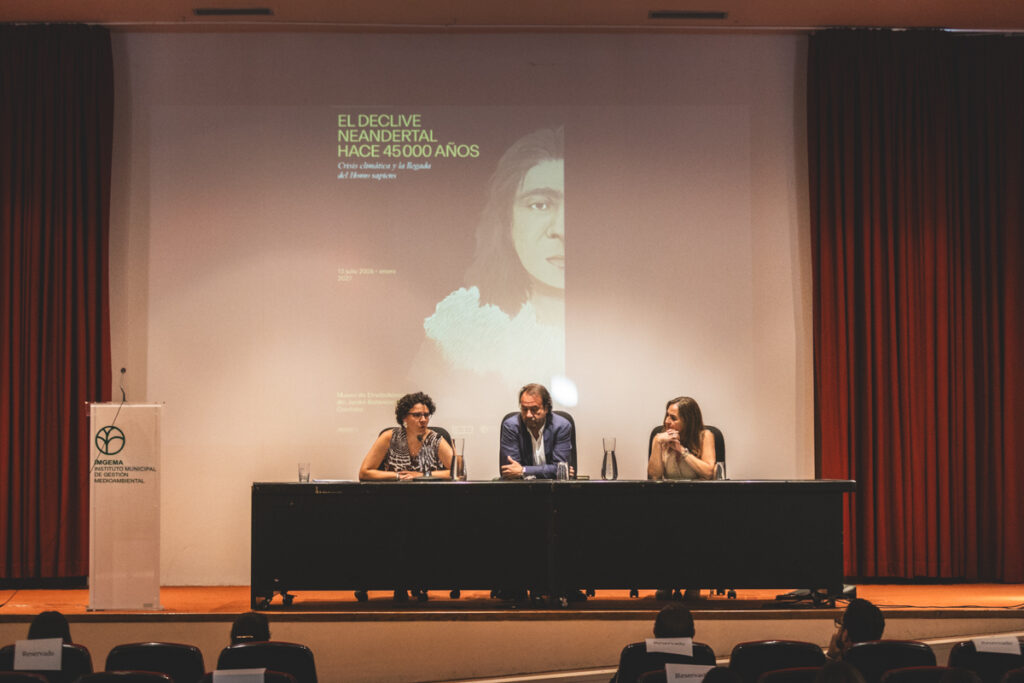
The opening ceremony brought together institutional and academic representatives around a shared message: the need to build bridges between research and the public. The president of IMGEMA–Royal Botanical Garden of Córdoba, Daniel García-Ibarrola Díaz, opened the panel with explicit thanks to the museum team and to the EvoAdapta Group for its six years of work “to keep getting to know humankind.” García-Ibarrola stressed that IMGEMA’s duty is not only to maintain the space but “to keep making room for exhibitions like this one,” and highlighted that Córdoba becomes a pioneer in Andalusia by hosting an exhibition endorsed by its previous stop at Altamira. “Bringing science to society is essential,” he said, before calling for greater awareness and preparedness in the face of climate change and inviting the people of Córdoba to visit the exhibition.
For her part, the Vice-Rector for Scientific Policy of the University of Córdoba, María José Polo Gómez, said she was honoured to represent the institution “especially here, where such competitive and prestigious research projects reach society.” Polo underlined the multidisciplinary nature of the questions the exhibition addresses —“the issues that have shaped our destiny”— and highlighted what we can learn from the past to look to the future today in matters as pressing as hydrology, air quality and resource management.
Research that lives on
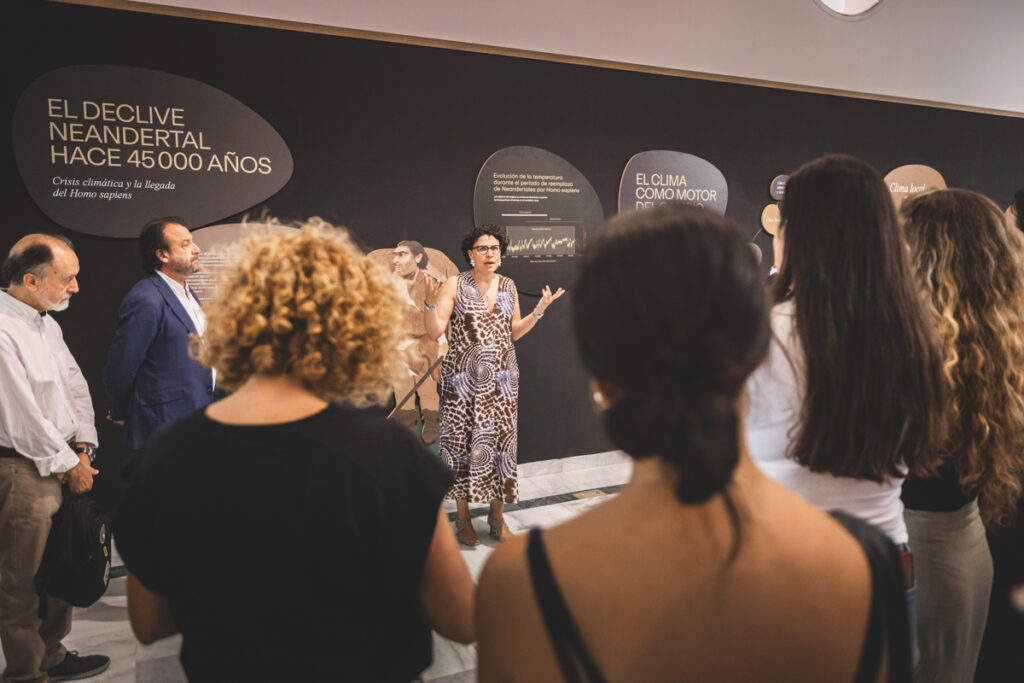
Behind the exhibition lie six years of cutting-edge research and a finding that rewrites one of the decisive chapters of human evolution: the Iberian Peninsula was the last territory where Neanderthals held out before becoming extinct. The team led by Marín-Arroyo has reconstructed, with unprecedented precision, the specific climatic and environmental conditions of the regions where the last Neanderthals lived. Their results show that climate did not act alone: rapid, abrupt environmental changes altered ecosystems and the resources available for the human diet and, combined with the arrival of Homo sapiens, precipitated the Neanderthal decline across the continent. It was in the Iberian Peninsula where, from 45,000 years ago, the last Neanderthal groups gradually moved towards the Mediterranean, following the herds they fed on, until they disappeared for good 35,000 years ago, leaving Homo sapiens as the only human species on Earth.
“Our study has revealed how the specific climatic and environmental conditions of the regions where Neanderthals lived were decisive in understanding their progressive disappearance from the European continent. It was precisely in the Iberian Peninsula where, from 45,000 years ago, the last Neanderthal groups moved towards the Mediterranean, following the herds of animals that made up their diet, until, 35,000 years ago, they became definitively extinct,” explained Ana Belén Marín-Arroyo, Professor at the University of Cantabria and Principal Investigator of SUBSILIENCE.
SUBSILIENCE: a completed project, a group that does not stand still
Until recently, information about past climate came from global records —such as Greenland ice cores or pollen from marine cores— which offered too general a picture of environmental conditions at the regional scale. SUBSILIENCE changed that scale. The project analysed subsistence strategies and assessed the resilience of the last Neanderthals in Europe in the face of the marked climatic changes that occurred between 57,000 and 27,000 years ago, during Marine Isotope Stage 3.
To achieve this, the team combined cutting-edge techniques —palaeoproteomics, stable isotope analysis and palaeoclimate modelling— with established archaeological methods such as zooarchaeology and radiocarbon (Carbon-14) dating. The work draws on bioarchaeological findings from twenty-one sites in southern Europe —in Serbia, Croatia, Italy, France and Spain— and on collaboration with leading international groups.
The SUBSILIENCE project concluded at the end of 2025, after six years of work, more than sixty scientific publications —several of them in journals of the highest international impact such as Nature and Science— and the training of a new generation of young researchers through grants such as the Marie Skłodowska-Curie actions and the Spanish Juan de la Cierva fellowships. But the end of the project is not the end of the road: the EvoAdapta Group continues today with new research projects and in the pursuit of new competitive funding, keeping alive a line of work that continues to attract talent and European resources to Cantabria.
The exhibition, a driver for knowledge transfer
Precisely because science does not end when a project closes, EvoAdapta has given its results back to society through open access and this touring exhibition, which brings cutting-edge research out of the laboratory and into museum galleries. The exhibition is today the most visible expression of that commitment to knowledge transfer: it introduces new audiences to a period of rapid, abrupt climate change in which competition between species transformed the landscapes of the Iberian Peninsula and the way its resources were exploited, and connects it with a present marked, once again, by climate change.
“Science only fully serves its purpose when it returns to those who make it possible. That is why we take research out of the archaeological sites and the publications and make it available to anyone who walks through a museum door. That this reflection can take place in a botanical garden —a space devoted to the bond between people and nature— makes it all the more fitting,” Marín-Arroyo stressed. With its arrival in Córdoba —a pioneering city in Andalusia in hosting the latest scientific advances on climate change, plants and Neanderthal extinction— the University of Cantabria reaffirms its position as a benchmark in science communication and in the dialogue between scientific knowledge and culture.
A bridge between past and present
Through the question “which factor was key to persisting as the only living species on the planet?”, the exhibition invites visitors to look into the transition between the last Neanderthal groups and the first Homo sapiens, and offers lessons for the future: just like the Neanderthals, our permanence on Earth depends on how we relate to our environment. Caring for it today is the condition for securing a sustainable future tomorrow.