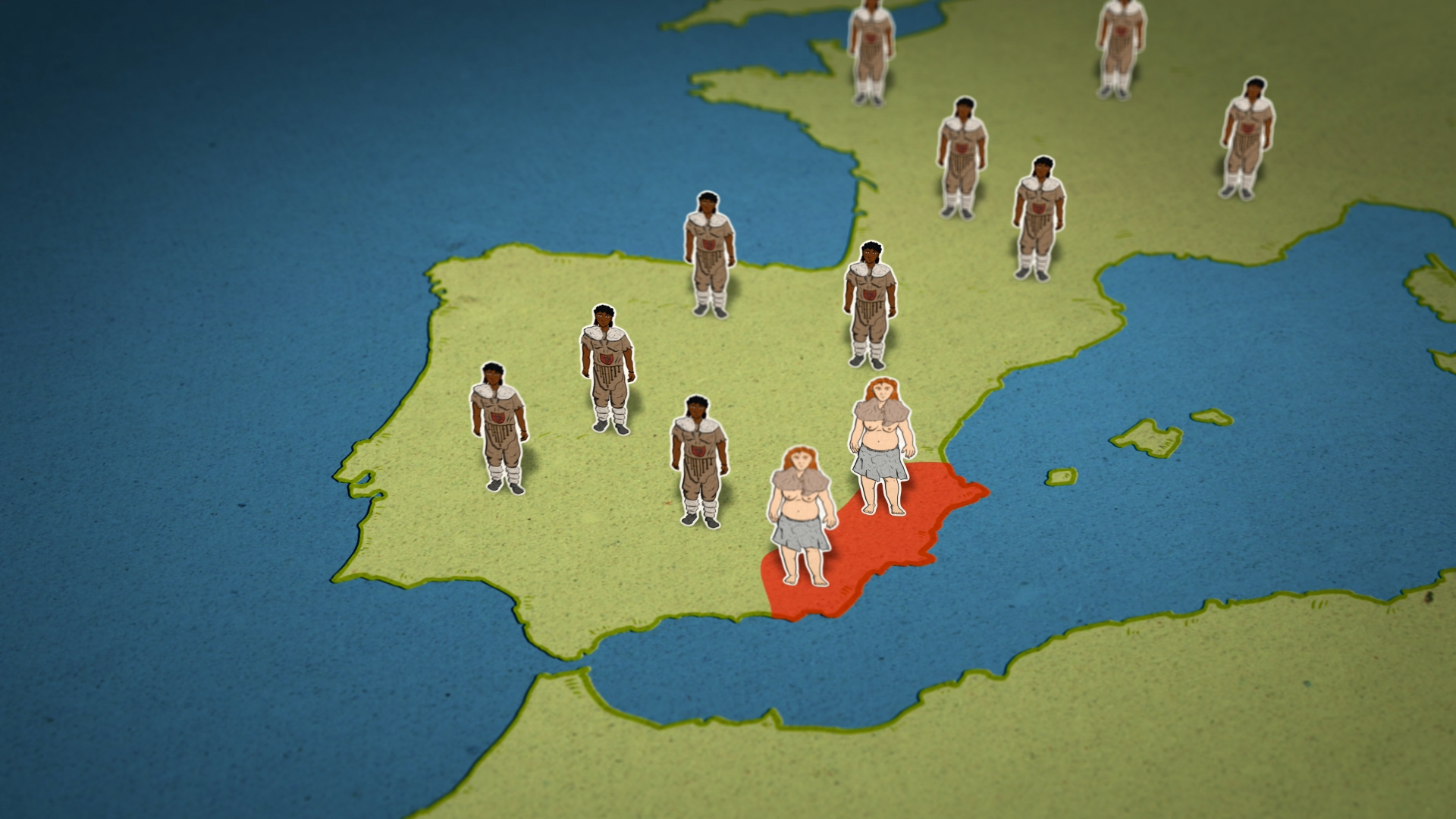

A study reconstructs their final 15,000 years and points to the decisive role of our own species
When the first groups of Homo sapiens began expanding across Europe, Neanderthals had already inhabited the continent for more than 300,000 years. They had survived two glaciations and the extreme environmental changes they brought.
Yet around 35,000 years ago, they vanished. What happened during the final millennia of their history?
An international study led by the EvoAdapta Research Group at the University of Cantabria, and just published in Science Advances has reconstructed this process in detail. The study, which marks the crowning achievement of the SUBSILIENCE project, funded by the European Research Council (ERC) through a Consolidator Grant, combines climatic, ecological and demographic models to simulate the evolution of Neanderthal populations and the first Homo sapiens in Europe between 50,000 and 35,000 years ago.
The results point to a clear conclusion: climate change weakened Neanderthals, but it was not sufficient to drive them to extinction. The expansion of Homo sapiens and their ability to maintain social connections emerge as key factors in explaining their disappearance.
Recreating Europe 50,000 Years Ago
The goal of the project was to address one of the most enduring questions in human evolution: why Neanderthals disappeared while our own species survived. To address this question, researchers reconstructed Europe as it was between 50,000 and 35,000 years ago, a period that includes the arrival and spread of Homo sapiens across the continent and the final millennia during which both human species coexisted in some regions of Europe.
The models reconstruct how landscapes, vegetation, and animal communities changed over time, providing a detailed picture of the environments on which both human species depended. In practical terms, they allow researchers to estimate how many people a given region could support under different climatic and environmental conditions.
Using these data, the team simulated hundreds of possible scenarios, much like in a video game, to explore how Neanderthal and Homo sapiens populations grew, moved across the landscape, interacted with one another, and ultimately survived or disappeared over time.
For decades, climate change has been considered one of the leading explanations for the disappearance of the Neanderthals. It was a plausible hypothesis, particularly because the coexistence period was marked by major climatic fluctuations that transformed European ecosystems and reduced the availability of resources across large parts of the continent, particularly in northern and eastern Europe.
However, the simulations show that environmental deterioration alone was rarely sufficient to drive Neanderthal extinction. Even under particularly adverse conditions, they were able to persist for long periods of time.
When Homo sapiens appear on the scene
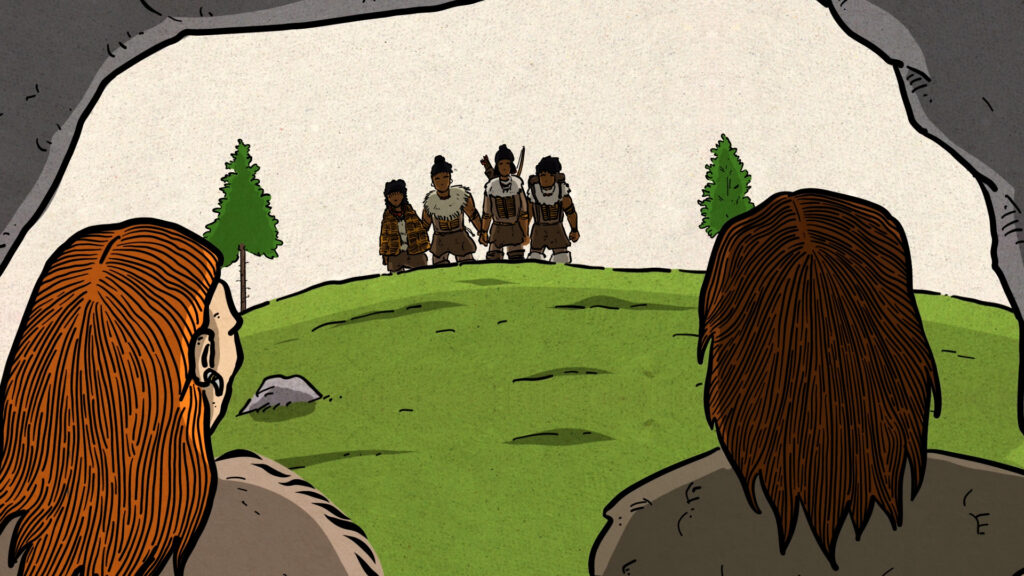
The picture changes when the models incorporate the expansion of our own species.
As Homo sapiens spread across Europe, and entered regions already inhabited by Neanderthals, the chances of survival for Neanderthal populations declined significantly. The results suggest that Homo sapiens could achieve population densities around 25% higher than those of Neanderthals, particularly in Central and Eastern Europe, the main routes of expansion into the continent.
The study also offers a novel perspective. The key factor is not only how many individuals make up a population, but also how they are connected to one another.
The simulations reveal that more interconnected groups were better able to withstand environmental crises and demographic declines. The exchange of individuals, knowledge, and resources between communities reduced the risk of isolation and increased the likelihood of long-term survival. In other words, resilience depended not only on population size, but also on the social networks that communities were able to maintain.
The Central Question of SUBSILIENCE
This conclusion speaks directly to the central question that has guided the ERC-funded SUBSILIENCE project over the past six years: what makes some populations more resilient than others in the face of periods of change and uncertainty? The project is led by Professor of Prehistory, Ana B. Marín-Arroyo, based at the EvoAdapta research group of the University of Cantabria.
SUBSILIENCE has brought together specialists from a wide range of disciplines to investigate how human societies respond to environmental change, competition, and social transformation. The project has produced more than 60 international scientific publications and trained a new generation of early-career researchers.
Ancient Lessons for Modern Challenges
At a time when humanity faces global challenges such as climate change and rapid technological transformations driven by artificial intelligence, the study offers insights that extend far beyond Prehistory. Its results suggest that resilience is shaped not only by resources or individual adaptive capacity, but also by the networks of cooperation and knowledge exchange that societies are able to build and sustain. Ultimately, understanding why Neanderthals disappeared helps us better understand the challenges of the present and the decisions that will shape our future as the only surviving human species on Earth.